TL;DR
- Hiring the wrong web developer can cost you thousands of dollars, months of time, and a website that doesn’t work — and the warning signs are visible before you sign anything.
- The 7 red flags: no portfolio, vague timelines, won’t explain what technology they use, no post-launch support, overpromising SEO results, no written contract, and pressure to decide immediately.
- The 7 green flags: transparent process with clear phases, portfolio you can verify, willingness to explain technical choices in plain English, clear deliverables and timeline, post-launch support included, honest about what they can and can’t do, and no pressure tactics.
- The single best question to ask: “Can you walk me through your process, step by step, and tell me how long each step takes?” If they can’t answer, walk away.
The Call You Don’t Want to Make
You hired someone to build your website. They seemed professional. They had a nice website themselves. You paid a deposit. Three months later, you have half a website, they’ve stopped returning your calls, and the last email you got was “we’re experiencing some delays.” You’re not the first person this has happened to — and the warning signs were there from the start.
The 7 Red Flags
Red Flag 1: No portfolio or unverifiable portfolio
What it looks like: They can’t show you websites they’ve built. Or they show you screenshots that could be from anywhere. Or they have a portfolio page with links that all go to the same template with different logos.
Why it’s a problem: If they’ve built websites before, they should be able to prove it. No portfolio means either no experience or unsatisfied clients they don’t want you to contact.
What to do instead: Ask for 3–5 live websites they’ve built. Visit them on your phone. Click around. Contact the site owner if you can — a 2-minute call with a past client tells you more than any portfolio.
Red Flag 2: Vague timelines
What it looks like: “It’ll take 6–8 weeks, maybe more, it depends.” When you ask what it depends on, they can’t or won’t say.
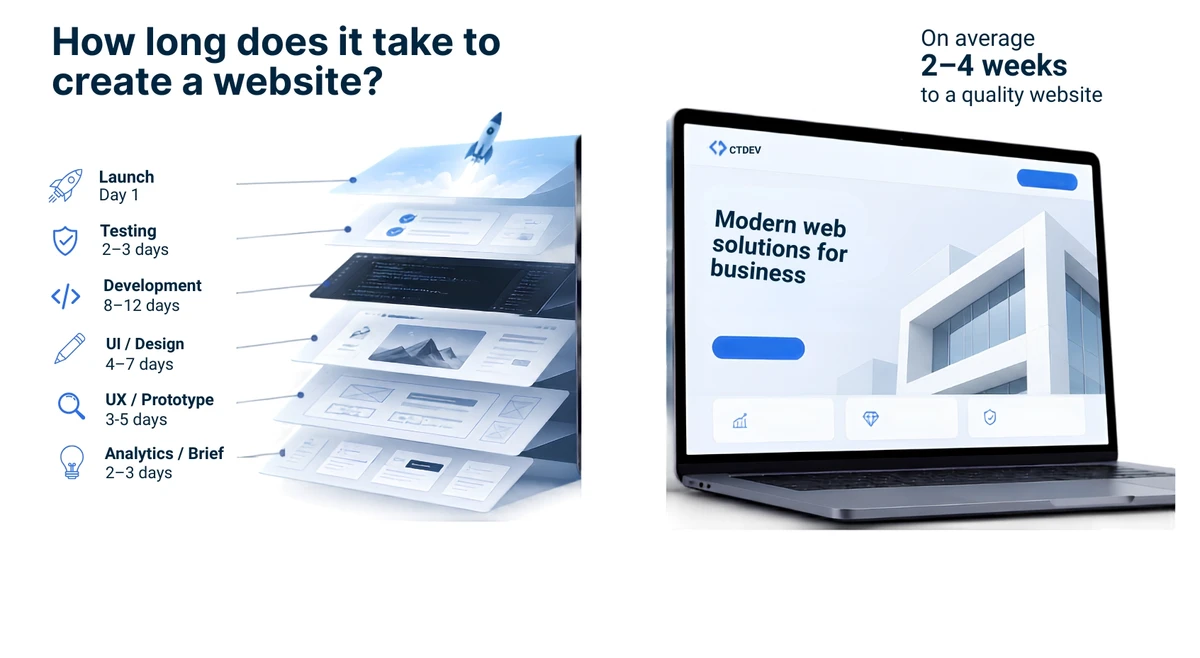
Why it’s a problem: Vague timelines protect the developer, not you. “It depends” can stretch to 6 months. A developer with a real process can tell you: “consultation takes 2 days, build takes 5 days, launch takes 1 day.”
What to do instead: Ask for a phase-by-phase timeline with specific day ranges. If they can’t break it down, they don’t have a process.
Related: How Long Does It Take to Build a Website? — what a real timeline breakdown looks like.
Red Flag 3: Won’t explain what technology they use
What it looks like: “Don’t worry about the technical stuff, I’ll handle it.” Or they name-drop tools without explaining why they chose them.
Why it’s a problem: The technology your website is built with determines its speed, security, maintenance cost, and whether you can ever move it to a different developer. If they won’t explain it, either they don’t want you to understand — because you’d ask questions they don’t want to answer — or they don’t know themselves.
What to do instead: Ask “what will my website be built with, and why?” A good developer explains in plain English: “We build static sites because they’re faster, more secure, and need no maintenance.” A bad developer says “don’t worry about it.”
Related: Why Your Website Doesn’t Need to Be Complicated — the technology choice matters more than most people realize.
Red Flag 4: No post-launch support
What it looks like: The contract covers building the site. Nothing about what happens after it goes live. When you ask about updates, they say “that’s extra” or “you’re on your own.”
Why it’s a problem: Launch day is the beginning, not the end. You’ll have questions. You’ll want small changes. Things might need adjusting. Without post-launch support, you’ll either pay extra for every tiny change or be stuck with a site you can’t modify.
What to do instead: Ask “what happens after my site goes live?” and get the answer in writing. How long is support included? What counts as a “small change” versus a “new project”? What’s the response time?
Red Flag 5: Overpromising SEO results
What it looks like: “We’ll get you to page 1 of Google in 30 days.” Or “guaranteed #1 ranking for your keywords.”
Why it’s a problem: No one can guarantee specific Google rankings — not even Google. Search ranking takes time (weeks to months), depends on factors outside anyone’s control (your competitors, your industry, Google’s own changes to how it ranks sites), and “page 1” for a meaningful keyword is a long-term goal, not a 30-day promise.
What to do instead: Look for honest language: “We’ll optimize your site for search, submit it to Google, and give you the foundation to rank over time.” That’s realistic. Anyone promising instant results is either lying or using tactics that violate Google’s rules — which will get your site penalized later.
Related: Why Your Website Isn’t on Google — honest search optimization takes time.
Red Flag 6: No written contract
What it looks like: “We don’t need a contract, it’s a simple project.” Or a one-page “agreement” that doesn’t specify deliverables, timeline, or payment terms.
Why it’s a problem: Without a contract, you have no recourse if the project goes sideways. “I thought that was included” becomes your word against theirs. A contract protects both parties.
What to do instead: Insist on a written contract that includes: what will be delivered, when, how much it costs, payment schedule, what happens if either party wants to end the project, and who owns the website and its content when it’s done.
Red Flag 7: Pressure to decide immediately
What it looks like: “I only have space for one more client this month” or “this price is only good for 48 hours” or “if you don’t start now, you’ll lose your spot.”
Why it’s a problem: Artificial urgency is a sales tactic, not a professional practice. A developer with a real process and a full pipeline doesn’t need to pressure you — they have enough clients. Pressure tactics mean they need your money more than they need to do good work.
What to do instead: A good developer will tell you their availability honestly and let you decide. “I have space starting in 3 weeks” is honest. “Sign today or lose your spot” is pressure.
The 7 Green Flags
Green Flag 1: Transparent process with clear phases
They can walk you through their process step by step: consultation, design, build, review, launch. Each phase has a purpose and a timeline. This isn’t improvisation — it’s a system they’ve refined.
Related: See our consultation process, build process, and launch process — documented step by step.
Green Flag 2: Portfolio you can verify
They give you 3–5 live websites. You visit them. They load fast, look professional, and work on your phone. You can contact the site owner if you want a reference.
Related: See our showcase — real websites we’ve built, all live and verifiable.
Green Flag 3: Explains technical choices in plain English
They don’t hide behind jargon. When you ask “why this technology?” they give you a reason you can understand: “We use static sites because they load in under a second, can’t be hacked the traditional way, and need no monthly maintenance.”
Green Flag 4: Clear deliverables and timeline
You get a written scope: “5 pages (Home, About, Services, Contact, Privacy), mobile-optimized, contact form, launched on your domain, by [date].” No ambiguity.
Green Flag 5: Post-launch support included
The project includes a support period: “30 days of post-launch support included — small changes, questions, adjustments.” They don’t disappear the moment the site goes live.
Green Flag 6: Honest about what they can and can’t do
They tell you when something is outside their scope: “We don’t do off-site SEO — link building and directory submissions are something you’d handle yourself.” They don’t pretend to be experts in everything.
Green Flag 7: No pressure tactics
They give you a quote and a timeline and let you decide. They’re happy to answer questions. They don’t create artificial urgency. A developer who respects your decision-making process is one who’ll respect you as a client.
The One Question That Reveals Everything
“Can you walk me through your process, step by step, and tell me how long each step takes?”
A developer with a real process will answer immediately and confidently. They’ve done this before — the answer is rehearsed because it’s real.
A developer without a process will hesitate, generalize, or say “it varies.” That hesitation tells you everything.
Related: How Long Does It Take to Build a Website? — what a real process timeline looks like.
30-Second Hiring Checklist
Before you sign a contract, check these five things:
- I’ve visited at least 3 websites they’ve built — on my phone
- They explained their technology choice in words I understand
- They gave me a phase-by-phase timeline with specific dates
- Post-launch support is included in writing
- They didn’t pressure me to decide immediately
If you can’t check all five, keep looking.
FAQ
How much should a web developer cost?
Website projects typically range from $1,000–$5,000 for sites. Less than $500 usually means you’re getting a template with your logo swapped in, not a custom build. More than $10,000 for a simple website means you’re paying for agency overhead. The real question isn’t just cost — it’s what you get for the money.
Related: How Much Does a Website Cost in 2026? — the full cost breakdown.
Should I hire a local web developer?
Local isn’t necessary — web development is remote-friendly. What matters more than location is: can you reach them when you need them, do they understand what you do and your audience, and do they have a process that works regardless of distance. That said, a local developer you can meet in person can be valuable for complex projects where face-to-face communication matters.
How do I know if a developer’s portfolio is real?
Visit the websites they say they built. Look for a credit link in the footer (some developers include “Built by [Name]”). Contact the site through their contact form and ask if they’d recommend the developer. A legitimate developer will be happy to provide references. If the portfolio links are dead, redirected, or all look like the same template with different logos, that’s a red flag.
What’s the biggest mistake people make when hiring a web developer?
Not asking about the technology. Most people focus on price, design, and timeline — and never ask “what will my website be built with?” The technology determines whether your site will be fast, secure, and cheap to maintain, or slow, vulnerable, and expensive to maintain. It’s the single most important question, and most people never ask it.
Bottom Line
The right web developer isn’t the cheapest or the flashiest — they’re the one who explains their process, shows you their work, and treats you like a partner rather than a transaction. The warning signs are always there; you just need to know what to look for.
Want to see what a transparent process looks like? Our consultation, build, and launch phases are documented step by step. See our process →
Ready to work with a developer who explains everything? Get a quote →