TL;DR
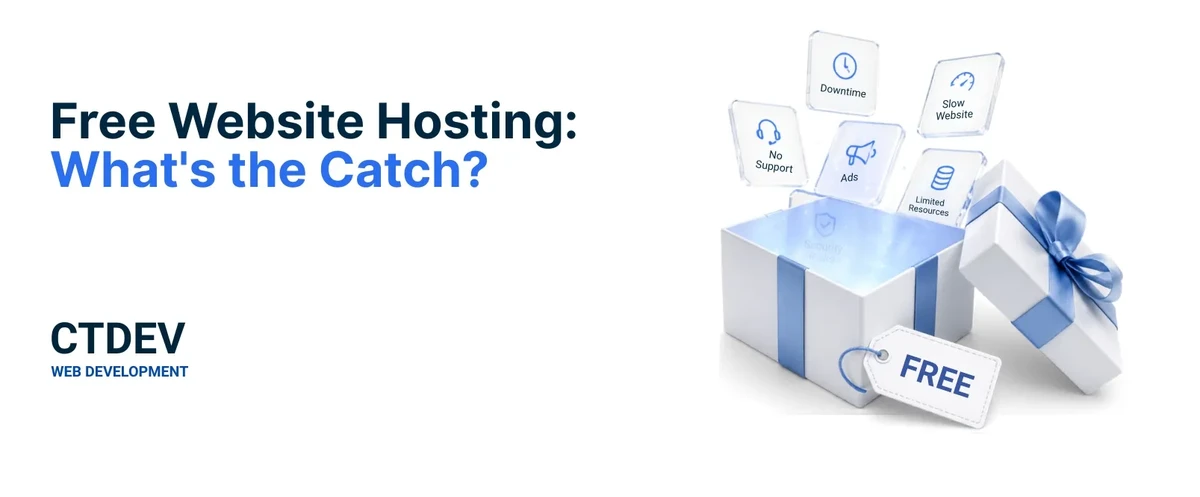
- Popular “free” hosting platforms (Wix, WordPress.com, Weebly, and others) hide real costs behind forced branding, ads, bandwidth caps, and storage limits.
- Free plans almost never let you use your own domain — your URL becomes something like
yoursite.wixsite.com, which hurts your credibility and SEO. - Performance is deliberately throttled on free tiers; slow sites lose visitors and rank lower on Google.
- Cloudflare Pages offers genuinely free hosting for static websites — no ads, no branding, unlimited bandwidth, custom domain included.
- The trade-off: you need a developer to build the static site (or do it yourself). Once it’s built, hosting costs $0 forever.
1. The Promise
Type “free website hosting” into Google and you’ll be met with a wall of cheerful promises: “Build your site for free!” “No credit card required!” “Get online in minutes!”
If you’re anyone watching every dollar, it sounds like a no-brainer. Why pay for hosting when you can get it for free?
Here’s the honest truth: it is possible to host a website without spending a cent. But the way most “free” hosting platforms work, you end up paying in other ways — with your brand’s credibility, your page speed, your Google rankings, and your patience. The devil really is in the details, and by the time you discover them you’ve already invested hours (or weeks) building on the wrong foundation.
2. The Most Common “Free” Hosting Platforms & What They Don’t Tell You
Almost every platform that offers a free plan is running the same playbook: give you just enough to get started, then make the experience so limiting that you’ll pay to escape. Here’s what the big names really deliver on their free tiers.
Wix Free — Drag-and-drop builder, 500 MB storage, limited bandwidth. The catch: Wix ads and branding on every page. No custom domain. Your address becomes a subdomain (yourname.wixsite.com/...).
WordPress.com Free — A simplified version of WordPress with limited themes. The catch: WordPress.com ads on your site. No custom domain, no plugins, severely restricted design choices.
Weebly Free — Basic site builder, 500 MB storage. The catch: Weebly branding on your site. No custom domain. Basic SEO tools only — you can’t fully optimise your pages.
The pattern is always the same. The free plan is not designed to be your final destination. It’s a funnel. Every button in your dashboard pushes you towards an upgrade: “Unlock custom domains — only $12/month!” “Remove ads — upgrade now!”
Before long, you realise the “free” website you spent all that time on only feels truly yours when you start paying.
3. The Real Catches (Way Beyond Money)
Even if you could stomach the ads and the limited storage, free hosting platforms come with deeper problems that directly hurt you.
3.1. SEO Penalty: The Subdomain Problem
When you use a free plan, your address looks like yoursite.wixsite.com or yoursite.wordpress.com.
Think of it this way: using a subdomain is like handing out business cards with someone else’s logo on them and a small note that says, “I’m just renting my storefront.” It tells your potential visitors that you’re not fully established.
While subdomains are technically indexable, they don’t carry the same perceived authority as a dedicated root domain. More importantly, the subdomain format signals to visitors — and to search engines through broader trust signals — that you’re renting space rather than owning your online property. If you’re competing in local search, that difference in perceived legitimacy is a real disadvantage.
3.2. Performance Throttling
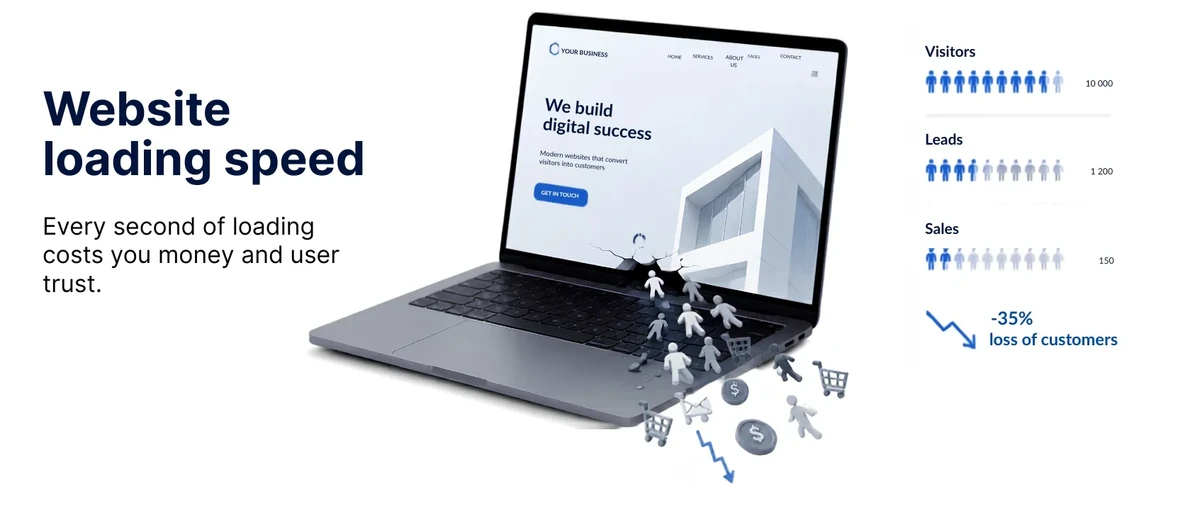
Free-tier users are hosted on the slowest, most overcrowded servers. Page speed directly impacts whether visitors stay on your site (most leave after 3 seconds of waiting) and where Google places you in search results. If your competitor’s paid hosting loads in under a second and your free page takes 5 seconds, you’re handing them the advantage.
3.3. No Real Ownership
Moving your site away from a free platform is often difficult — sometimes impossible. These platforms want to keep you locked in. Your content, your design, your images: all wrapped inside a system you can’t easily export. If you decide to leave, you often have to start from scratch.
3.4. Ads You Didn’t Choose on Your Site
Your website is often the first impression a new visitor gets. Do you really want the first thing they see to be an ad for a competitor, or some random product you have no control over? Free platforms place their own ads on your site, and you can’t remove them without upgrading.
3.5. Upsell Fatigue
Free platforms are masters of friction. Want to use a custom font? Upgrade. Want to add a contact form? Upgrade. Want basic analytics? Upgrade. Every interaction reminds you that you’re a second-class user until you pay. It’s exhausting.
4. When Free Hosting Actually Works
We’re not saying all free hosting is useless. If you’re running a personal blog, a hobby project, a classroom experiment, or a temporary event page — go ahead. The stakes are low, and you can live with the limitations.
But your site is different. You need credibility. You need speed. You need your own domain, a fast loading time, and the ability to show up in local search results. Free tiers simply aren’t built for that. Treat them as proof-of-concept toys, not as a long-term foundation.
5. The Alternative: Genuinely Free Hosting Without the Usual Catches
What if you could have the best of both worlds? A site that costs exactly $0 per month, uses your own domain, loads lightning-fast, and never shows an ad you didn’t approve. No upsells, no forced branding, no throttled performance.
It’s not a fantasy — it’s what happens when you combine a static website with Cloudflare Pages.
We covered why your website stays always online and loads instantly in another post. Here’s the short version for this discussion.
A quick, jargon-free explanation: Think of a static website like a beautifully printed menu that sits on the table. Once it’s printed, no kitchen is needed to show it to a customer — it’s just there, fast and reliable.
The free platforms we mentioned earlier are like a full-service restaurant kitchen: every time someone visits, the kitchen has to fire up the stoves, cook the meal, and plate it — all before the customer can see it. That’s why dynamic sites (Wix, WordPress) need expensive servers and why “free” comes with so many strings attached.
A static site is just the finished menu. It requires no ongoing cooking, costs virtually nothing to host, and is ready to serve instantly. The only catch? You need a chef (a developer) to print that menu for you the first time. After that, you can hang it up for free, forever.
We explain why your website doesn’t need to be complicated in more detail elsewhere on the blog.
5.1. Meet Cloudflare Pages
Cloudflare Pages is a platform for hosting static websites. It’s the exception that proves the rule: it’s genuinely free, not a crippled teaser, because it’s built on a completely different business model. Cloudflare makes its money from enterprise security and performance services — the free static hosting is simply a gateway, not a funnel to trap you.
Here’s what you get, completely free:
- No ads, no branding. Your site shows only what you put on it.
- Your own custom domain. No subdomain shame — use
yoursite.com. - Unlimited bandwidth. Traffic spikes? No problem. No extra charges.
- Free SSL certificate. HTTPS padlock in the address bar, without paying a cent.
- Global CDN. Your site is served from data centres all over the world, so it loads fast everywhere.
5.2. The Real Cost Comparison Over Time
It’s easy to look at a free Wix plan and think you’re saving money. But what happens when you inevitably need your own domain, remove the ads, and get a little more speed? Here’s a simple comparison over three years:
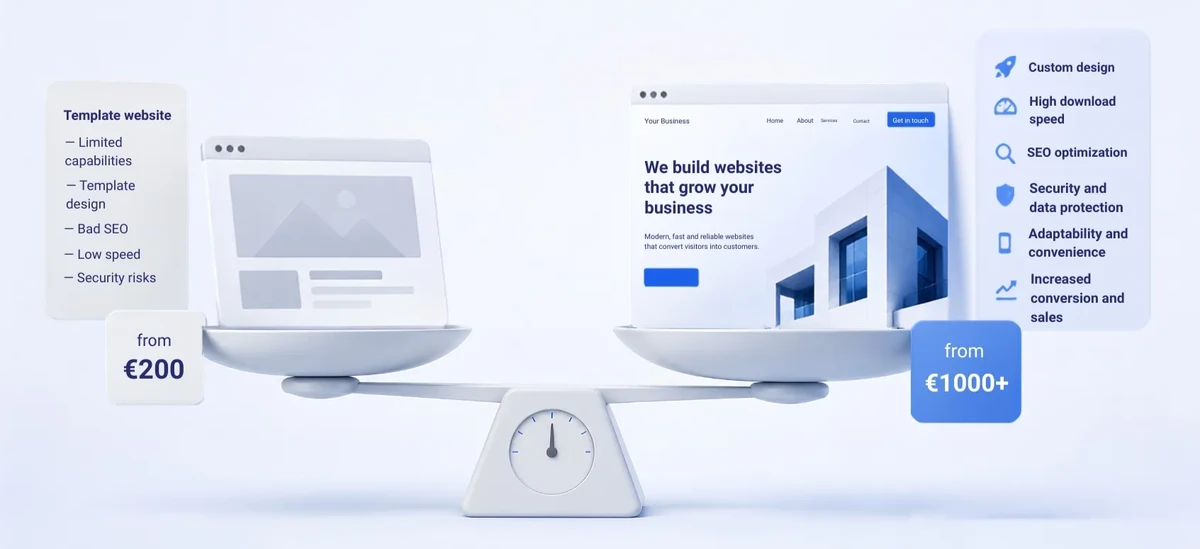
Year 1 — “Free” platform path: mid-tier upgrade at $12–$20/month = $144–$240. Static site on Cloudflare: one-time professional build at approximately $1,200 (example). Hosting: $0.
Year 2 — “Free” platform path: renewals, possibly higher tier = $144–$240. Static site on Cloudflare: hosting $0.
Year 3 — “Free” platform path: same recurring cost = $144–$240. Static site on Cloudflare: hosting $0.
By the end of the second year, most people have already paid more in monthly subscriptions than they would have for a static site that costs nothing to host forever. After that, it’s pure savings. It’s like buying a shop sign once instead of renting the space above your door every month.
5.3. “But I’m Not Technical — How Do I Make Changes?”
This is the elephant in the room, and it’s a fair question. If a static site needs a developer, does that mean you’re stuck paying every time you want to change your opening hours or add a new photo?
Not at all. Modern static sites can be built with simple editing tools that let you update text and images without touching a line of code. Think of something as easy as filling in a form — and your site updates instantly. At CTDev, we set up a straightforward backend (often called a headless CMS) so you can keep your content fresh by yourself. You don’t need to call us to swap a menu image or add a holiday announcement. You only need a developer again if you want a major redesign or new functionality.
5.4. A Typical Scenario
Imagine a local bakery that started on the Wix free plan. Their address was bakeryname.wixsite.com/bakery. The site was slow, carried Wix ads, and wasn’t showing up reliably when people searched for “bakery near me.”
They switched to a professionally built static site, moved to their own domain (bakeryname.com) on Cloudflare Pages, and received a simple dashboard where they could update their weekly specials. The result? No more ads, near-instant loading, and within a few months they’d climbed onto the first page of local Google results. Their hosting bill? Still $0 — and the one-time build cost was less than what a year of Wix premium would have been.
This is a representative example based on common patterns we see, not a specific client engagement.
6. Which Path Is Right for You?
Everyone’s situation is different. Here’s a quick way to decide:
- Stick with a traditional free host (Wix, Weebly, etc.) if you’re running a hobby blog, testing a side-project idea, or honestly don’t care about speed, SEO, or credibility. The limitations won’t hurt you.
- Go the static site route if you need to look professional, load fast, and rank well — and you’re happy to make a one-time investment that eliminates monthly hosting bills forever. This is the option for people who want a website that works as hard as they do, without the constant drip of subscription fees.
7. The Bottom Line
“Free website hosting” from the big name platforms is rarely free where it counts. The price you pay comes out of your credibility, your search rankings, and your visitors’ patience. Those costs are far more expensive than a monthly invoice.
There is another way. A static site, professionally built, hosted on Cloudflare Pages, gives you a genuinely free hosting future — no ads, your own domain, unlimited visitors, and zero recurring bills. The one-time cost of having it built is just that: one-time. After that, you own a fast, reliable asset that grows with you.
Want to see if a static site makes sense for you?
Let’s talk — no jargon, no commitment. We’ll look at your current situation (or your idea) and tell you honestly whether this approach fits. If it does, we can build something that costs you nothing to host, forever. If not, we’ll tell you that too.
This post was written by CTDev. We help people break free from subscription-trapped websites with fast, static sites that cost $0/month to host — forever.